

Aao Maina
On the grandfather I keep losing, every random Tuesday

I woke up dreaming about him.
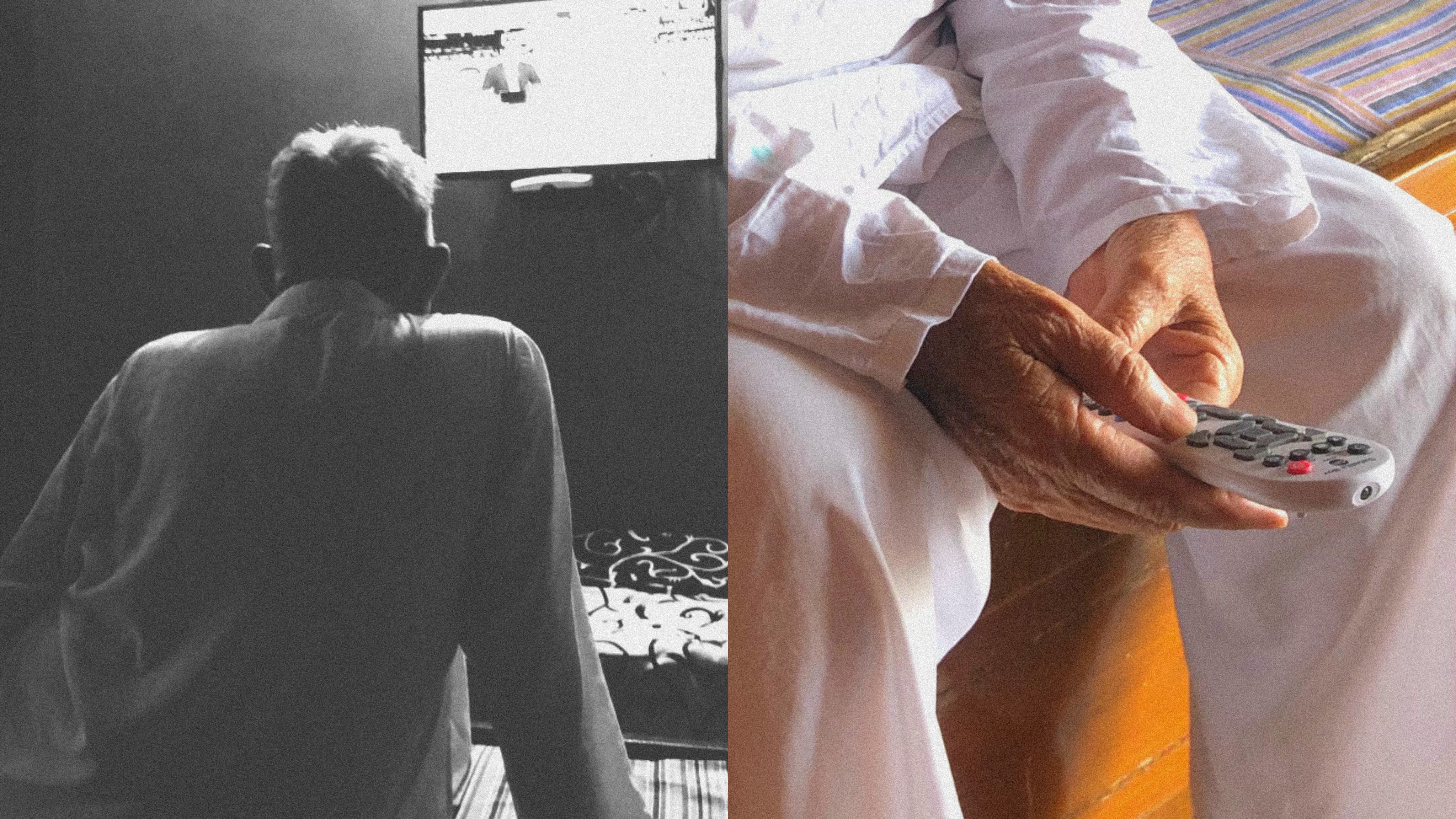
It wasn’t the first time he visited me in my dreams, but it’s the first time I’ll be writing about him. My maternal grandfather knew me for 21 years. I’ll know him for the rest of my life.
Waking from a dream where he visits feels like losing him all over again.
I spent more than half my childhood at my grandparents’ place. It was my favourite place in the world — a home with no loud anger, only love and giggles. I used to tease him endlessly. Hiding his wallet. Unleashing my uncle’s pet labrador on him. Slipping ice into his white cotton kurta. Calling him from an unsaved number, pretending to be a customer service advisor from a telecom company, telling him his phone services would be blocked because he hadn’t paid the bill — he had paid — my badi maa (what I call my grandmother) beside me, bursting with laughter as we conspired together.
He had a sweet tooth and diabetes. He would eat when he thought no one was watching. At least, he thought that. Because someone was always watching — me. And as soon as he spotted me, he would burst into laughter with squinted eyes, embarrassed at being caught, tightening his fist so I couldn’t take the sweet away.
My hands are shaking as I write this.
The last time we met was on a random Tuesday in August 2021. My grandparents had just had a new air conditioner installed, and I remember him patting the bed to show me my space — here, now there’ll be no fighting over who sleeps in front of the cooler. A small, ordinary gesture. The kind you don’t know to hold onto. Funny how life never lets you know when something is happening for the last time.
I went to see him in the hospital. He was unconscious. I called out — Nana, Nana — but he didn’t wake up. Though when others visited, he was always awake, unable to speak but present. I never got to say anything to him. Not even thank you for never once saying no.
We used to watch cricket together. The news. I haven’t watched cricket since. I don’t feel like it. Whenever we met, his first words to me were always Aao Maina — welcome, Maina, his name for me — and straight away a hug. It didn’t matter where we were. At home, at a family function, bumping into him on the street while he was buying mangoes. Always the same words. Always the hug.
It’ll be five years in 2026 since we lost him. I’d be lying if I said I’ve processed it even a little. Part of why I haven’t is because I was never really allowed to.
There is an idea — unspoken but everywhere — that because grandparents are older, because they have already lived a long and full life, losing them is somehow easier. Expected. Natural. We reserve devastation for the young, for those who died before their time. When someone is 75 or 80, we tell ourselves it was coming. We tell the grieving person, gently or not so gently, to accept it. To move on. After a point, you are not even supposed to call it a loss.
This makes the one grieving feel utterly alone. It makes them wonder if they are being dramatic. If they are allowed to feel this much. I wanted people to know how badly I was hurting. But I could see that the weight of grief was being distributed unevenly — some losses counted more than others, and mine was quietly being filed under expected. I think of all the people carrying this same grief in silence, while the rest of us minimised it without even realising. We should do better. We should start validating that pain — not in spite of the fact that they lived a long life, but because of how much of that life they gave to us.
Sometimes I’m not even allowed to miss him. My grandmother, and others, say that missing the dead disturbs their peace — that you are keeping them from moving on to the next life. I don’t know how true that is. Maybe it’s something humans have built to make the living feel less guilty about letting go. I haven’t decided yet.
What I know is this: a few years ago, one of the shopkeepers near their colony said to my grandmother, baba no longer comes to shop. My grandmother told him quietly that he had passed away. I froze. I had always wondered how people cry in public. And then it was my turn.
Whenever I cross that colony and see the same grocery stalls where he shopped every day, I get chills down my spine. I still reach for him in small moments — a joke he would have laughed at, a cricket match on television, a sweet I can’t eat without thinking of his squinted eyes and tight fist.
Grief is strange like that. It doesn’t announce itself. It arrives on random Tuesdays, in familiar streets, in dreams you wake from too soon. I don’t think I’ll ever be fully okay with him being gone. You don’t move on — you just learn to live inside the absence. Like furniture rearranged in a familiar house, you try to get used to the new layout. But every once in a while, you still reach for the cooler switch where it used to be.
If grief is what I have left — if it’s the only thread that still ties me to him — then I’ll hold it. Because grief, in its own way, is just another language of love.
Aao Maina. Always the same words. Always the hug.
Sometimes I wish I was still 8 years old and nothing bad has happened yet.
💌 Who taught you what love looked like, before you even knew to call it that?
"... if it’s the only thread that still ties me to him — then I’ll hold it" reflects how special it is ❤️
Beautiful 🩷